🔥 Limited-time offer: Enjoy up to 10% off selected karaoke bundles! Don’t miss the beat!

Close
🔥 Limited-time offer: Enjoy up to 10% off selected karaoke bundles! Don’t miss the beat!
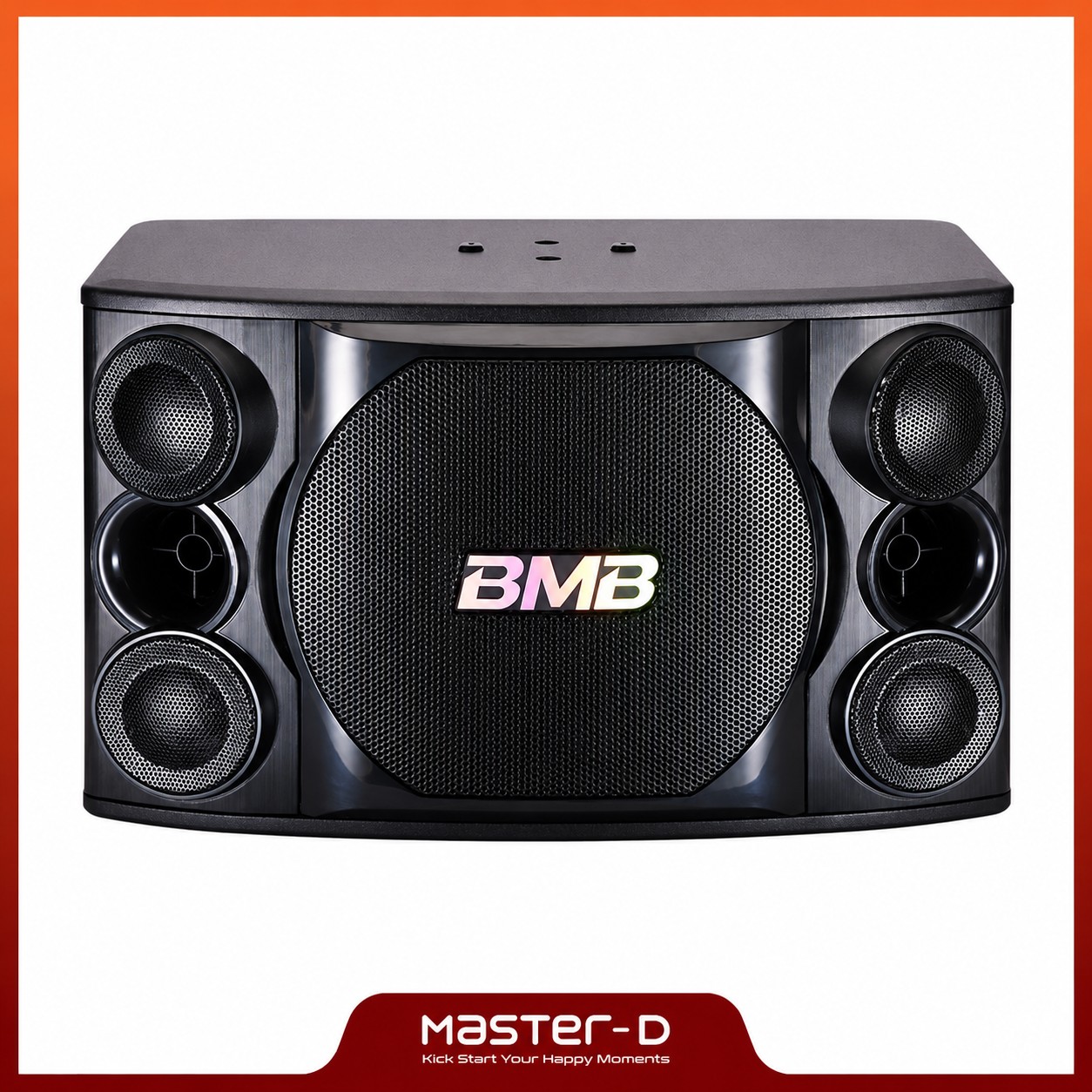
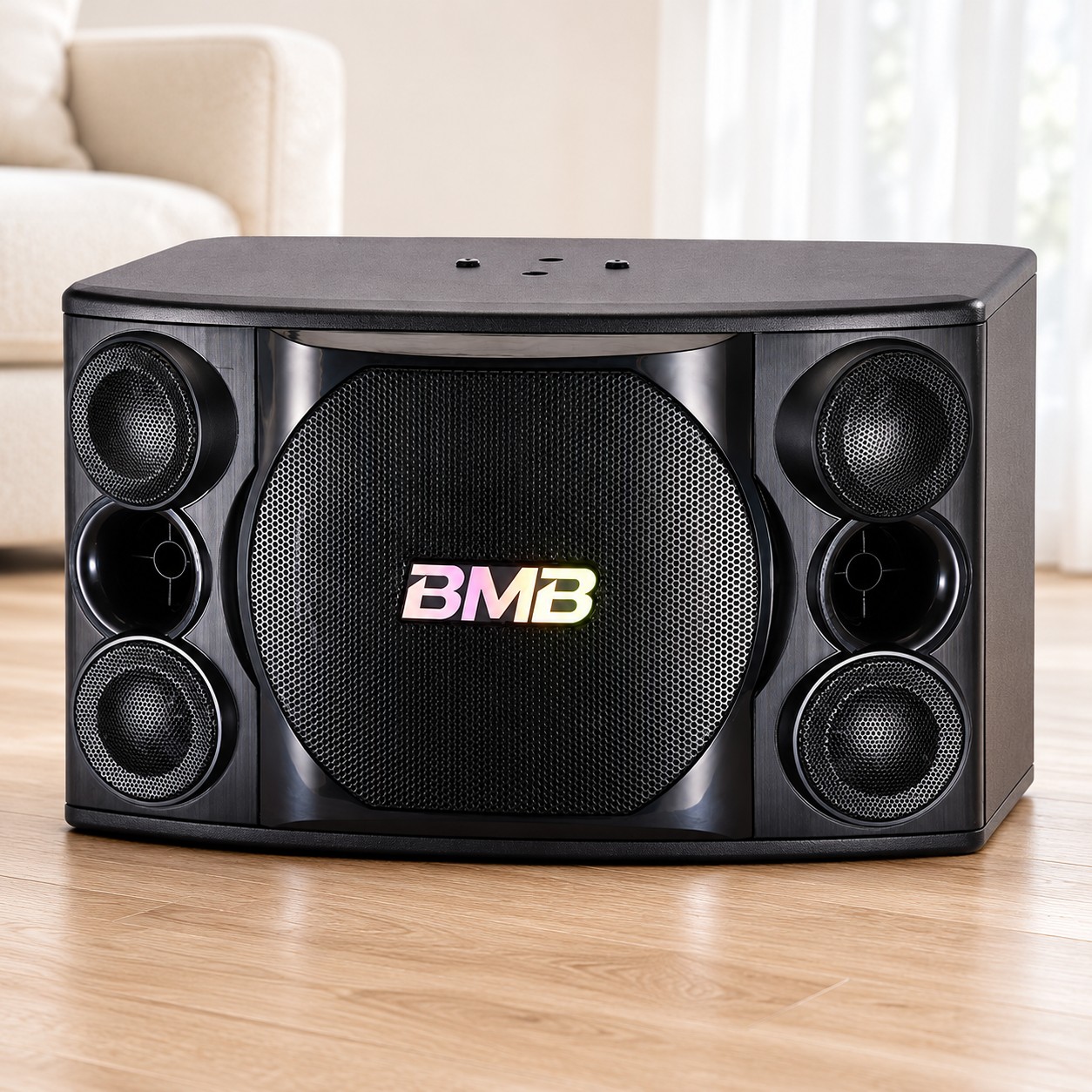
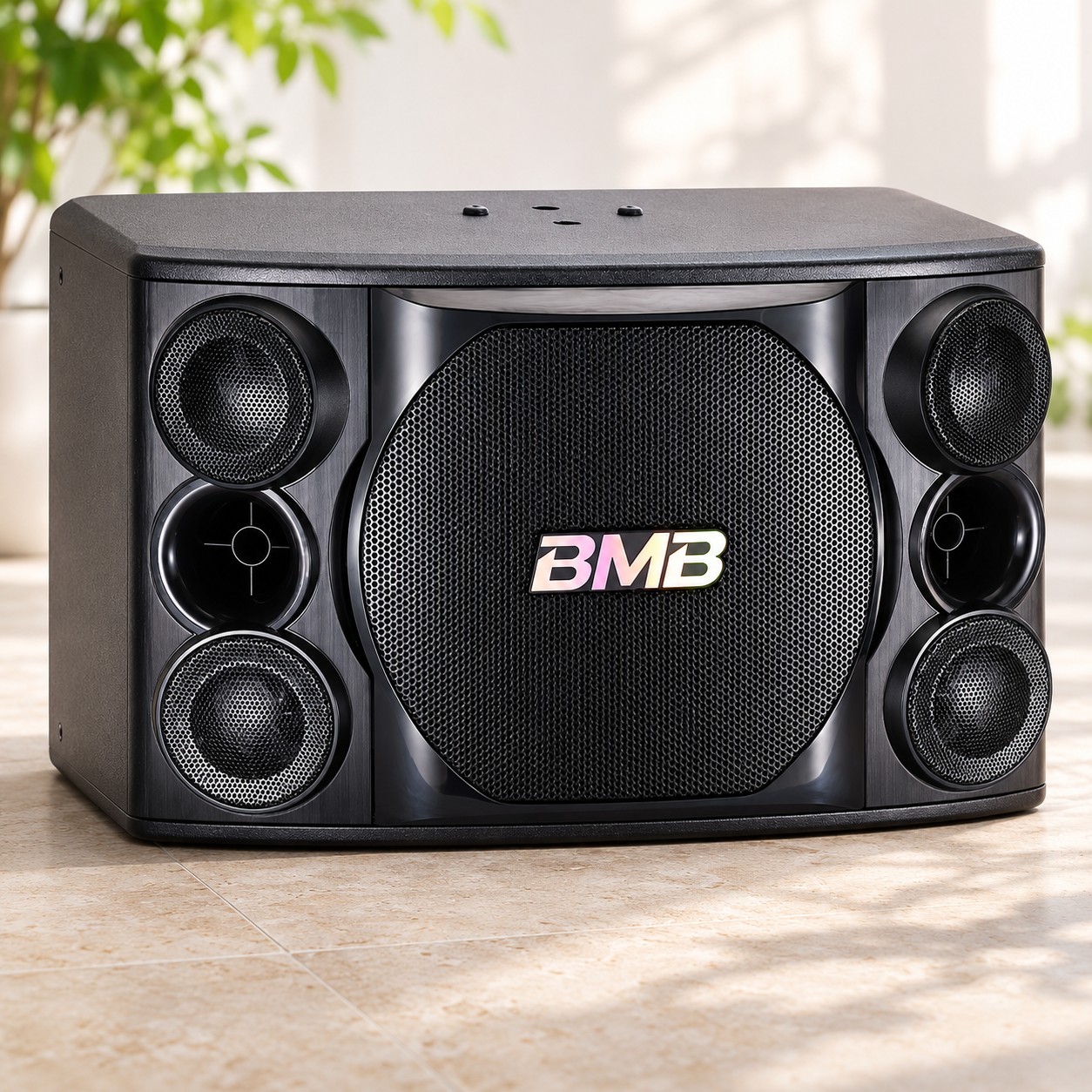
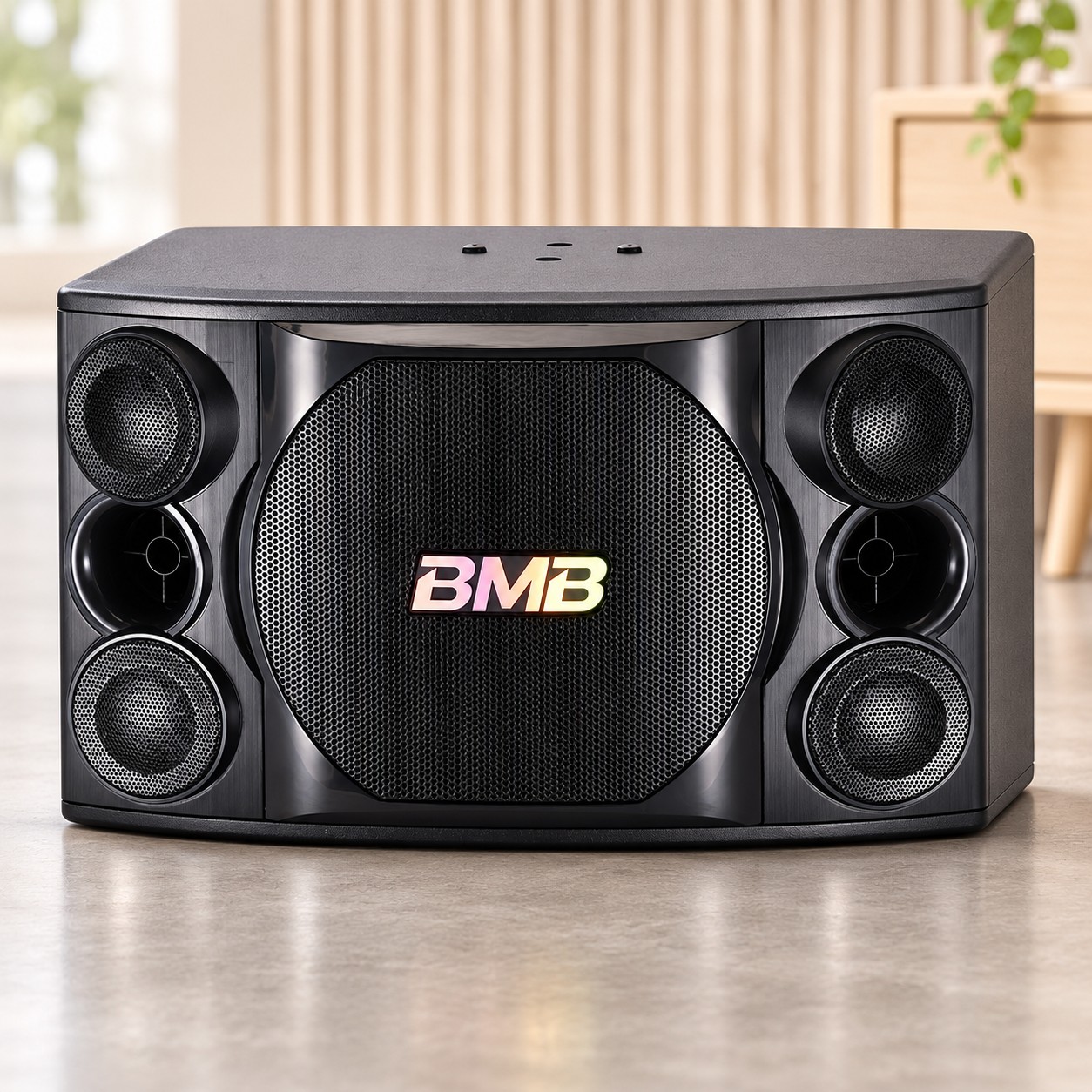
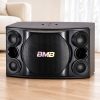
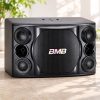
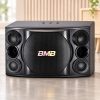
The BMB CSJ-312 is a 12-inch, 3-way, 5-speaker bass-reflex loudspeaker developed for commercial karaoke applications. It combines a large woofer with dedicated mid-high and high-frequency drivers to reproduce the two things at the centre of a karaoke experience: the backing music and the singer’s voice. For a first-time buyer, this is the sound-output component of a complete system. It works with an external amplifier, while a karaoke player, microphones and a mixer or karaoke processor provide and control the audio signals.
Within the CSJ-312/310 series, the CSJ-312 is the larger model. It has a 305mm woofer, 450W continuous and 900W music power handling, an 8-ohm nominal impedance and a cabinet measuring 580 × 350 × 360mm. Its distinguishing features include BMB’s newly developed Vortex Ring Horn and a centrally positioned bass-reflex port design exclusive to the 12-inch model in this series.
A song contains deep bass, midrange instruments and vocals, and high-frequency detail. A 3-way loudspeaker divides the reproduction of these frequency regions between different types of driver. In the CSJ-312, there are five drivers altogether: one 305mm (12-inch) woofer, two 70mm mid-high drivers and two 70mm tweeters. The woofer uses a 65.0mm voice coil; each of the smaller drivers uses a 13.5mm voice coil.
The woofer is responsible for the lower-frequency foundation of the sound, while the smaller drivers handle their designated higher-frequency regions. This gives the speaker a dedicated arrangement for the different elements within music and singing. “Five speakers” refers to the five drive units inside one cabinet, rather than five separate cabinets. Similarly, “3-way” describes the internal division of frequencies, rather than a requirement for three input channels.
The tweeter incorporates BMB’s newly developed Vortex Ring Horn. BMB describes its special horn structure as storing and releasing acoustic energy to express the dynamics of modern music and deliver powerful sound. Dynamics are the differences between quiet and energetic parts of a performance: a gentle verse, the impact of percussion, or the lift of a chorus. The horn is part of the speaker’s acoustic design for presenting that musical energy.
BMB also specifies Japanese-made paper cones for the tweeters. This is a feature of the tweeter cone material, and should not be read as a statement that the whole finished loudspeaker is made in Japan. Together, the driver layout and horn technology define the CSJ-312’s approach to commercial karaoke reproduction.
One of the CSJ-312’s particular features is its centrally positioned bass-reflex port arrangement. According to BMB, centralising the port makes the distances from the sound-producing units to the port more nearly equal. The intended benefit is to improve phase differences between the units and reduce interference when sound waves combine, supporting clear sound reproduction.
For a newcomer, phase describes how the timing of one sound wave relates to another. When waves combine, their timing can affect the resulting sound. The CSJ-312’s central port layout addresses this as part of its enclosure design. This feature is identified by BMB for the 12-inch model; it is an important distinction when comparing the CSJ-312 with the smaller CSJ-310.
BMB specifies a frequency range of 40Hz to 20kHz at -10dB, measured under full-space conditions. The lower end relates to bass reproduction and the upper end to high-frequency detail. The -10dB qualification matters: the figure describes a range at a stated measurement threshold, rather than promising equal loudness at every frequency or the output of a dedicated subwoofer.
The published sensitivity is 91dB, measured at 1W/1m on-axis in an anechoic environment using a sine sweep. Sensitivity describes the measured sound level for a given input under specified conditions. It can help compare speakers measured in the same way, but it is not the maximum sound level of the complete karaoke system. Actual results also depend on amplifier output, distance, room acoustics and placement.
The CSJ-312 has a continuous power-handling rating of 450W and a music rating of 900W. These are different rating conditions for the speaker’s ability to handle input power. They do not mean that the cabinet has a built-in amplifier or that it constantly consumes 900W of electricity. A suitable external amplifier is required to drive it.
Its nominal impedance is 8 ohms. Amplifier matching should take account of the amplifier’s output at the intended load, the number of cabinets connected to each channel, the desired volume and operating headroom. Adding speakers to one amplifier channel can alter the electrical load. Correct gain structure and clean output matter: an amplifier driven into clipping can create damaging distortion. A properly planned installation considers the complete signal chain, rather than choosing components by the largest wattage number alone.
The cabinet uses 18mm acoustic particle board. Its dimensions are 580mm wide, 350mm high and 360mm deep, and each speaker weighs 18.0kg. These are practical figures to check before deciding where the speaker will be installed. Supports and any mounting arrangement must be suitable for the load and follow the manufacturer’s installation instructions. Space for cable access and appropriate port clearance should also be considered.
The specified connection is a 19.05mm (3/4-inch) binding-post terminal. An amplifier connects to the loudspeaker using suitable speaker cable. Final sound quality is affected by positioning, listening distance, room reflections and tuning, so installing a larger cabinet alone does not guarantee a better result in every room.
A typical system starts with a karaoke player or music source and microphones. Their signals pass through a mixer or karaoke processor for volume balance, tone adjustment and any required vocal effects. An amplifier then powers the CSJ-312. The speaker itself does not supply songs, a screen, microphone mixing or wireless streaming functions; those capabilities come from the selected source and control equipment.
For comfortable singing, the balance between vocals and accompaniment needs careful adjustment. Speaker and microphone placement also influence feedback, the ringing or howling that occurs when a microphone repeatedly picks up amplified sound. Thoughtful installation and appropriate settings help the system work as a whole. Where additional bass output is required, a subwoofer can be considered with suitable crossover settings and level matching.
The CSJ-312 offers a 12-inch woofer, five drivers, 450W continuous power handling and the series’ 12-inch-specific central port design. The CSJ-310 is a smaller 10-inch model with three drivers and 250W continuous power handling. The CSJ-312 also has a larger cabinet and weighs more: 18.0kg per speaker compared with 12.0kg for the CSJ-310. These differences are useful when comparing installation space, amplification and system requirements.
There is no single room-size rule based only on the woofer diameter. Room shape, acoustic treatment, listening distance, desired volume and the number of speakers all affect the choice. Share these details, together with your existing amplifier and processor models, with Master-D so we can discuss how the CSJ-312 would fit into your intended setup.
The BMB CSJ-312 brings together a 12-inch woofer, a 3-way five-driver system, Vortex Ring Horn technology and a central bass-reflex port arrangement in a dedicated commercial karaoke loudspeaker. It is a model to consider when your installation calls for the specifications and physical size of the larger CSJ speaker. Open the Specification tab for the full manufacturer figures, then contact Master-D to discuss component compatibility, placement and the requirements of your room.
| Model | CSJ-312 |
|---|---|
| System | 3-way, 5-speaker bass reflex |
| Frequency range | 40Hz–20kHz (-10dB, full space 4π) |
| Sensitivity | 91dB (1W/1m, on-axis, anechoic sine sweep) |
| Nominal impedance | 8Ω |
| Power | 450W continuous / 900W music |
| Dimensions (W × H × D) | 580 × 350 × 360mm |
| Net weight | 18.0kg per speaker |
| Woofer | 305mm (12-inch) cone, 65.0mm voice coil × 1 |
| Mid-high driver | 70mm cone, 13.5mm voice coil × 2 |
| Tweeter | 70mm cone, 13.5mm voice coil × 2 |
| Connector | 19.05mm (3/4-inch) binding posts |
| Cabinet | 18mm acoustic particle board |
| Carton dimensions | 830 × 690 × 440mm |
| Shipping weight | 39.0kg per pair |
| Accessories | Owner’s manual × 1; product registration card × 1 |